Replacing a conservatory roof in the UK typically costs between £3,200 and £22,500, depending on the size of the structure, the roofing material, and whether structural upgrades are needed. Polycarbonate is the most affordable option, glass sits in the mid-range, and fully tiled systems command the highest investment, though they also deliver the strongest returns. If you need a quick answer: budget at least £6,000–£10,000 for a standard mid-sized conservatory roof replacement to cover materials, labour, and any additional work.
The sections below break down every cost factor in detail, compare roof types side by side, and explain what you should realistically expect from installation to long-term savings.
What affects conservatory roof replacement cost?
No two projects are identical. Before any installer puts a figure on paper, they will consider the following:
Conservatory size and shape
Size is the single biggest cost driver. More square metres means more materials, more labour hours, and often more complexity. A simple lean-to conservatory measuring 3m x 3m will cost a fraction of a large Edwardian or Victorian structure spanning 5m x 5m or beyond.
Shape adds further complication. Hipped roofs, curved ridges, and Victorian facets require precision cutting and additional junction details that a rectangular lean-to does not. Always expect a premium for unusual geometry.
Roofing material
The three mainstream options, polycarbonate, glass, and tiled systems, span a wide price band:
| Roof type | Typical cost per m² | Small conservatory (approx. 9m²) | Medium conservatory (approx. 15m²) | Large conservatory (approx. 25m²) |
| Polycarbonate | £175–£350/m² | £2,700–£4,000 | £4,000–£6,500 | £6,500–£10,000 |
| Glass | £200–£400/m² | £4,000–£5,500 | £6,000–£9,500 | £9,500–£15,000 |
| Solid tiled | £300–£600/m² | £5,500–£7,000 | £8,000–£12,000 | £12,000–£22,500 |
*Figures are guide prices inclusive of supply and installation. Individual quotes will vary by location, installer, and specification. Always request a fixed, itemised quotation.*
Labour costs
Tradespeople charge roughly £300–£500 per person per day for conservatory roofing work. Most installations require at least two people and take between one and five days, depending on the roof type. Tiled and glass systems naturally take longer than polycarbonate replacements due to the weight, precision, and finishing involved.
Structural reinforcement
Older conservatory frames were not necessarily designed to carry a heavier solid roof. Before a tiled system is installed, the existing frame must be assessed for load-bearing capacity. If reinforcement is needed, this adds cost, though the precise figure depends on the extent of work required.
Additional extras
Items that are sometimes quoted separately include:
- Scaffolding hire – around £450–£900 per week for a small conservatory if not included in the main quote
- Waste removal – most reputable installers include this, but confirm in advance; a small skip costs roughly £220 if arranged separately
- Electrical work – LED downlights and new circuits typically cost £30–£50 per hour
- Internal plastering – if you want a plastered ceiling with a tiled roof, expect an additional £880 upwards for a 3m x 3m space
- Roof windows or glazed panels – popular additions to tiled roofs to retain natural light; priced individually
Comparing the three main conservatory roof types
Polycarbonate roof replacement cost
Polycarbonate is the most affordable roofing material and the quickest to install. It suits homeowners working to a strict budget or replacing a like-for-like roof on a conservatory used primarily in spring and summer.
The drawback is thermal performance. A typical polycarbonate roof has a U-value of around 1.6–2.4 W/m²K. In practical terms, this means the space will be cold in winter and unbearably hot in summer. Modern twin-wall or multiwall polycarbonate panels are a step up from the original single-skin sheets, but they still fall well short of glass or tiled alternatives on energy efficiency.
Best for: Budget-conscious homeowners replacing a damaged polycarbonate roof like-for-like, or seasonal-use conservatories.
Glass conservatory roof replacement cost
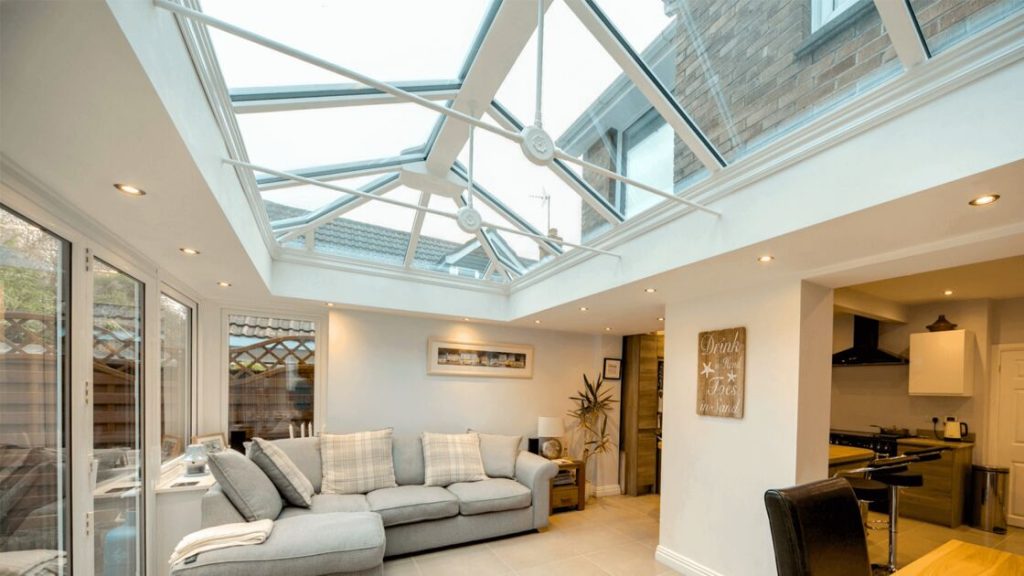
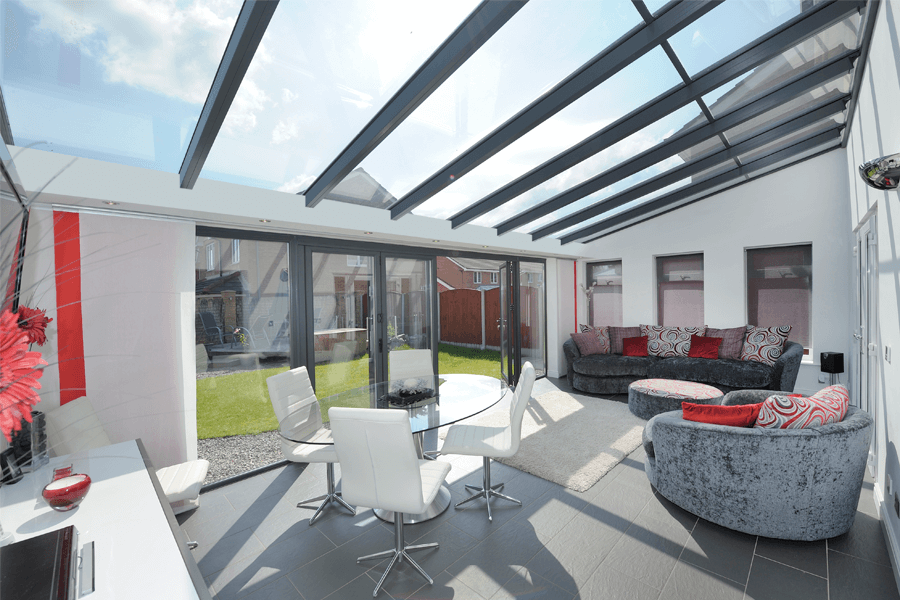
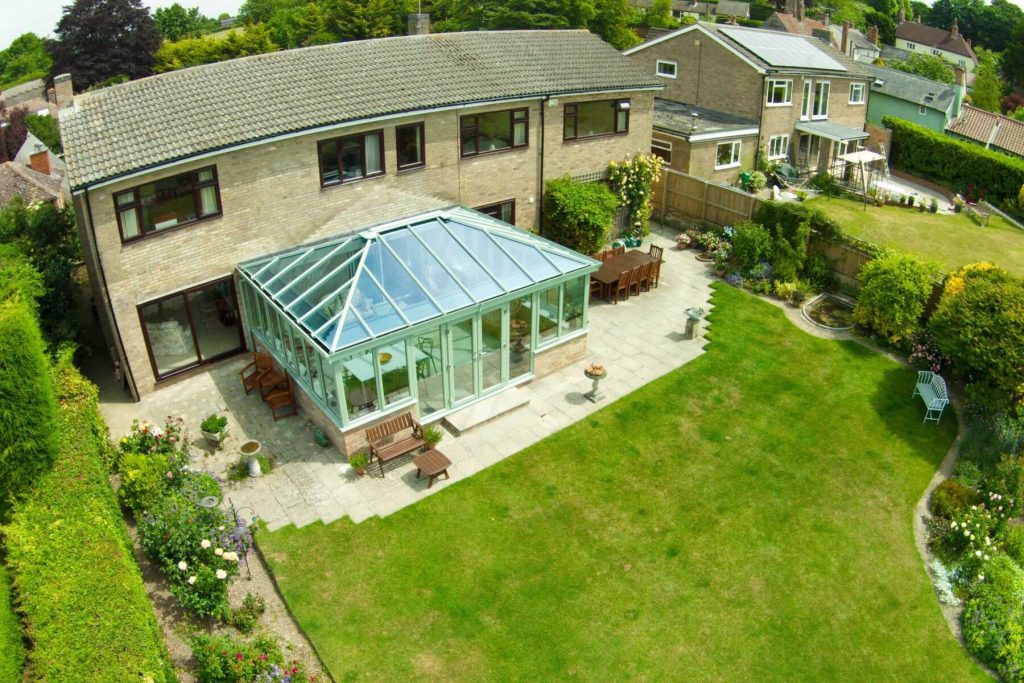
Glass sits comfortably between polycarbonate and solid tile on both price and performance. High-specification double-glazed units with solar-control coatings or self-cleaning glass offer excellent thermal efficiency and flood the space with natural light.
BSF Windows’ glass conservatory roofs use 28mm clear toughened double-glazed units as standard, with upgrade options including Activ Self Cleaning glass and Activ Blue or Neutral Solar Control glazing. Thermally efficient top caps prevent condensation build-up year-round.
Best for: Homeowners who want year-round usability without sacrificing natural light, and those upgrading from polycarbonate to a noticeably higher standard.
Tiled conservatory roof replacement cost
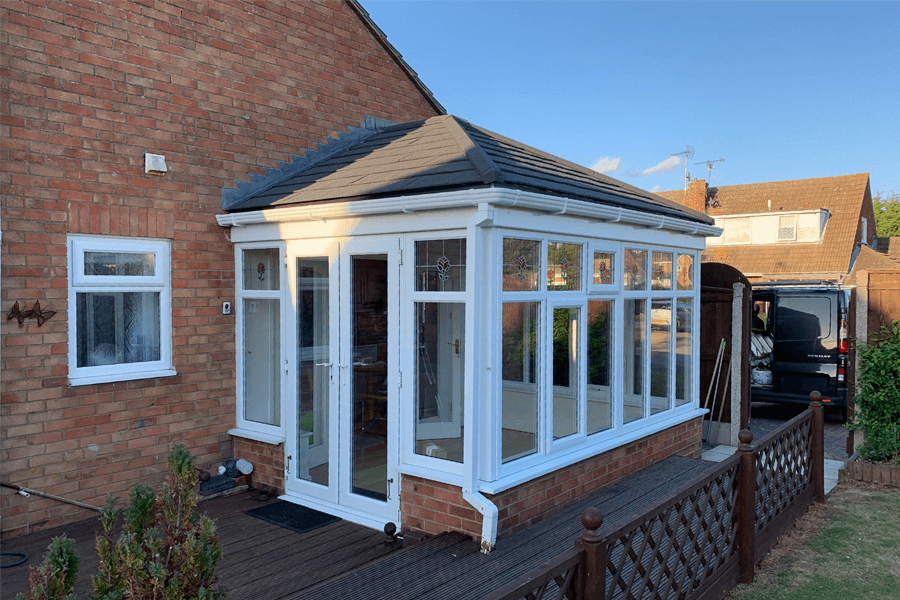
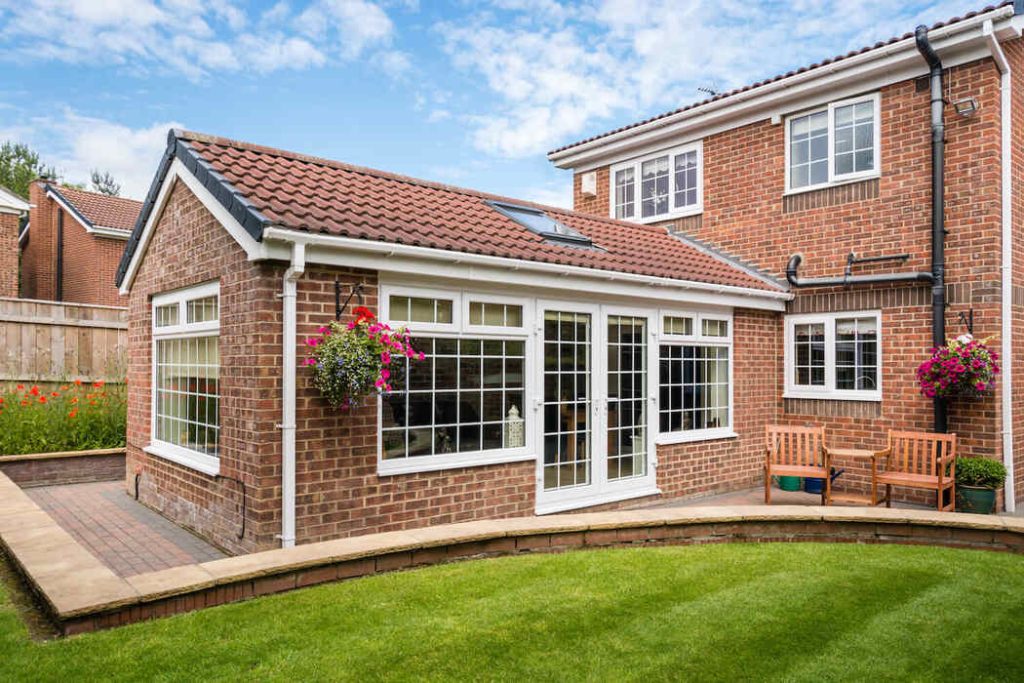
A solid tiled system is the premium choice. It transforms what was once a seasonal sun trap or cold store into a fully habitable room indistinguishable from a traditional house extension. BSF Windows’ tiled conservatory roofs use lightweight tiles, which means the structural demand on the existing conservatory frame is far lower than with traditional clay or concrete tiles, and they include premium honeycomb insulation that achieves exceptionally low U-values.
Key performance credentials include:
- 25-year manufacturer’s guarantee
- 40-year guarantee against weather penetration
- JHAI building control approval
- Available in colours including Charcoal, Slate, and Oak
Best for: Homeowners who want a genuine year-round living space, the best energy efficiency, noise reduction, and the strongest return on investment.
Is a tiled roof worth paying more for?
The upfront cost of a tiled roof is higher, but the long-term case is compelling.
Energy savings are one of the clearest financial arguments. Independent research by AECOM found that a replacement conservatory roof delivers average energy bill savings of around £200 per year. Other estimates range from £100 to £600 annually depending on how the space is heated and used. Over a 25-year roof lifespan, the cumulative saving is substantial.
Compare this to the ongoing cost of an uninsulated polycarbonate roof. A typical 12m² conservatory with a poorly performing roof can leak hundreds of pounds of heat energy every winter. The difference in running costs helps to offset the higher upfront investment of a tiled system over time.
Property value is the second major consideration. A solid tiled roof can increase a home’s value by an estimated 5–10%, with some industry figures suggesting a boost of £15,000–£20,000 on the right property. Buyers and their solicitors increasingly expect building regulation certificates for structural work, so a properly approved installation protects your sale as much as your heating bill.
Noise reduction is a quality-of-life benefit that polycarbonate and even glass cannot match. Rain on a polycarbonate roof can make conversation difficult. A tiled roof with proper insulation creates a genuinely peaceful interior environment.
Conservatory roof replacement costs by conservatory style
Different conservatory shapes carry different labour demands:
| Conservatory style | Typical complexity | Expected cost uplift vs. lean-to |
| Lean-to | Low | Baseline |
| Edwardian (rectangular) | Low–medium | 5–10% |
| Victorian (three or five facet) | Medium–high | 15–25% |
| Gable-end | Medium | 10–15% |
| P-shape or bespoke | High | 20–30%+ |
A lean-to is the simplest and therefore cheapest structure to re-roof. Victorian and bespoke shapes require precision cutting, more junction sections, and additional installation time, all of which feed through to the final price.
Does conservatory roof replacement need planning permission?
This is one of the most commonly asked questions, and the answer depends on what you are replacing and with what.
Like-for-like replacements (e.g., polycarbonate for polycarbonate, or glass for glass) generally fall under permitted development and require neither planning permission nor building regulation approval, provided the footprint and height remain unchanged.
Upgrading to a solid tiled roof is a different matter. When you replace a translucent roof with a solid structure, the conservatory changes from being classed as a temporary structure to a permanent one. This change of use means building regulations approval is almost always required. The regulations focus on:
- Structural integrity – confirming the frame and foundations can support the added weight
- Thermal performance – the new roof must meet a U-value of no more than 0.16 W/m²K under Approved Document L (2021)
- Ventilation – adequate trickle and rapid ventilation must be maintained
- Fire safety – materials must meet relevant fire standards
Planning permission is typically not required for a tiled roof replacement in England, as long as the conservatory’s size, shape, and height are not altered. However, exceptions apply if your property is a listed building, sits in a conservation area, or if the original conservatory was built with planning permission for specific reasons. Always check with your local authority or the Planning Portal before work begins.
BSF Windows’ tiled roofs carry JHAI building control approval, which acts as an approved alternative to local authority building control and provides full regulatory certification. This is important when you come to sell your home, as buyers’ solicitors routinely request building regulation certificates for structural work.
How long does a conservatory roof replacement take?
Installation timelines depend on the roof type:
| Roof type | Typical installation time |
| Polycarbonate | 1–2 days |
| Glass | 2–3 days |
| Solid tiled | 3–5 days |
| Large or complex structures | Up to 1 week |
Most projects do not require you to vacate your home. Disruption is concentrated to the conservatory itself. A good installer will protect the internal space during the work and clear all debris before completion.
If building regulation approval is needed, the inspector will typically visit to sign off the completed work, which may add a short administrative period to the overall project timeline.
What is the return on investment for a new conservatory roof?
Measuring ROI on a conservatory roof replacement involves three distinct areas:
- Energy bill reduction. Savings of £100–£600 per year are widely reported, with £200 per year cited in independent research as a realistic mid-point for a typical UK home. At £200 per year, a £10,000 tiled roof investment has a payback period of approximately 10 years on energy alone, before factoring in rising energy prices or additional contributions from neighbouring rooms.
- Property value uplift. A well-installed, building-regulation-approved solid roof can increase a property’s value by more than the cost of the work itself in many cases. A conservatory that functions as a genuine habitable room is a selling point; one that is too hot in summer and too cold in winter is not.
- Usability and lifestyle value. A conservatory that is unusable for eight months of the year delivers no value. A tiled or high-performance glass roof converts it into a room that functions as a home office, dining space, or living area for the full twelve months. This is difficult to put a precise figure on, but it is the most commonly cited reason homeowners make the investment.
What’s included in a typical conservatory roof replacement quote?
A fully scoped quote from a reputable installer should include:
- Removal and disposal of the existing roof
- Supply and installation of the new roof system
- All flashings, trims, and weatherproofing
- Guttering and drainage connections
- Any structural checks and reinforcement (confirm this specifically)
- Building regulation submission and approval (for tiled roofs)
- Manufacturer and installer guarantees
What is sometimes excluded, and worth clarifying before you sign:
- Internal plastering or decoration
- Roof windows or glazed panels
- Electrical work (downlights, sockets)
- Scaffolding (if access requires it)
How the BSF Windows process works
At BSF Windows, every conservatory roof project begins with a no-obligation site visit. The team surveys the existing structure, takes precise measurements, discusses your requirements without pressure, and provides a detailed written quotation with a design visualisation.
Once you accept the quote, a 25% deposit is taken and registered with BSF’s insured deposit protection scheme through CPA. A second survey confirms measurements and finalises designs before manufacturing begins. Once the product passes BSF’s quality control process, installation is scheduled and completed efficiently with minimal disruption to your household.
Most BSF Windows products carry a 10-year guarantee, and tiled roofs come with a 25-year manufacturer’s guarantee and a 40-year guarantee against weather penetration.
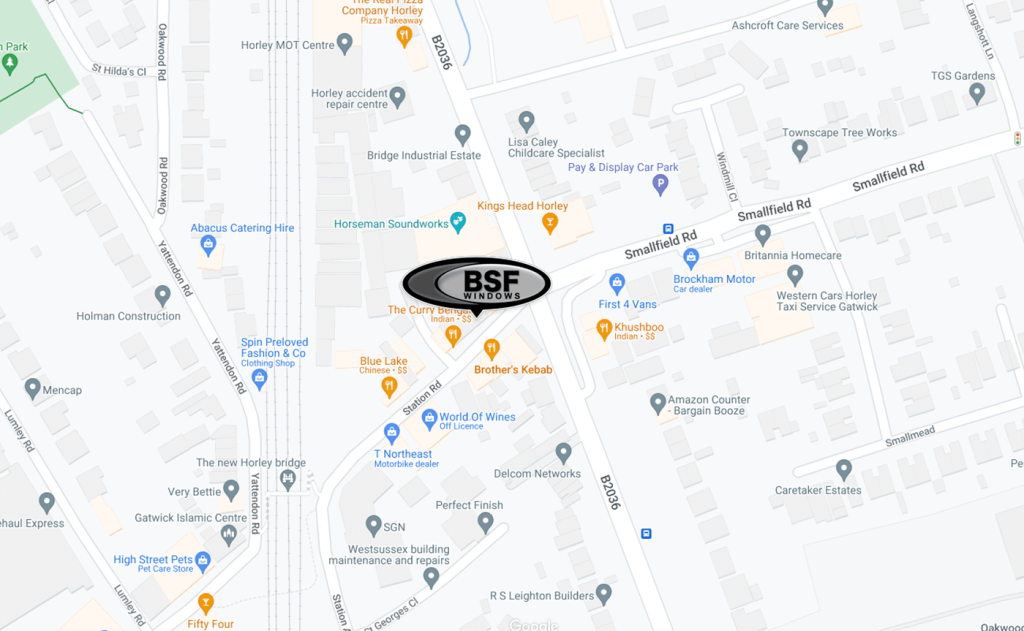
BSF Windows serves homeowners across Surrey and Sussex, including Crawley, Guildford, Dorking, Brighton, Reigate, Horley, Redhill, Epsom, Weybridge, Leatherhead, and the surrounding areas. View the full list of areas covered.
To explore completed installations before making a decision, browse the BSF Windows project gallery.
Ready to find out what a replacement conservatory roof would cost for your home? Request a free, no-obligation quote from BSF Windows or call 01293 408 713 to speak with the team directly. You can also visit the BSF Windows showroom in Surrey to see glass and tiled roof options in person before making any decisions.